
Shelf Life: The Long Game Book Review (monthly)
Protocols: An Operating Manual for the Human Body, Andrew Huberman, Penguin, £15 (688 pages)
In 2021 a surprising new category of entertainment was born. The Huberman Lab Podcast, was one guy talking into a microphone, often for hours - giving people the "science" behind why trendy things like ice baths and saunas are supposedly good for us.
It's now approaching 500 episodes, with millions of followers globally.
Its creator, Andrew Huberman, a neuroscientist and professor at Stanford, has just distilled that body of work into a book, Protocols: An Operating Manual for the Human Body.
So, as briefly as I can I will try to explain: what it is, who it’s for, and give it a Shelf Life rating (Read, Skim or Skip).
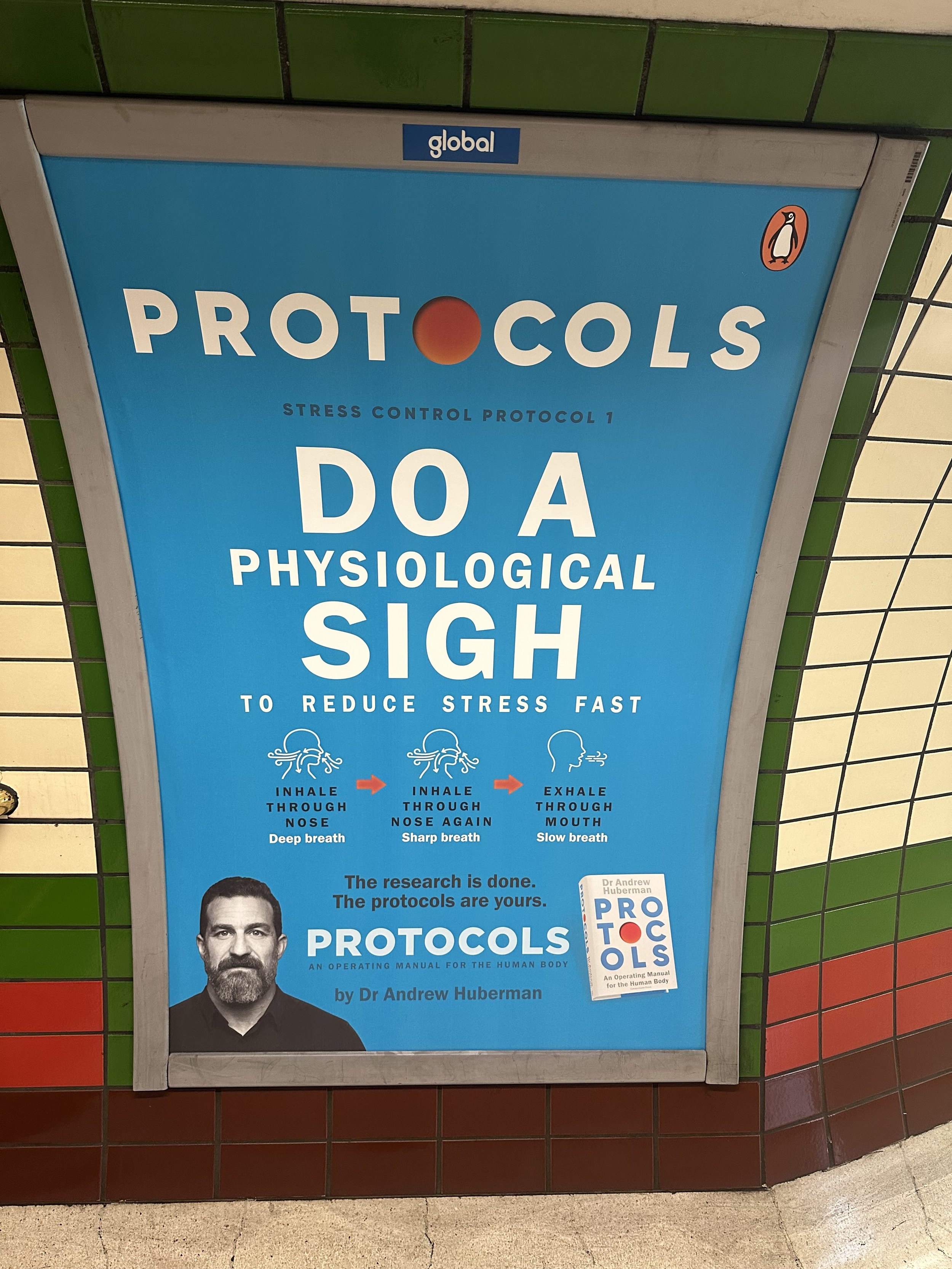
Protocols at Piccadilly Station
What is it? In his own words, a ‘guide for improving your health and performance’. Huberman defines a protocol as ‘an established formula for overcoming a common obstacle or reaching a specific health or performance goal’. He is at pains to suggest these are not ‘hacks’. ‘Hacks’ are shortcuts and admirably he wants you to think about forming durable habits.
The protocols (which to save you £15 or £7.99 on Audible - are listed in full below) cover ways to master our sleep, fitness, stress, nutrition, light exposure (yes, really), motivation and personal growth. It runs to 688 pages and even with the audiobook version at 1.2x speed it is over 18 hours of relentless and sometimes overly technical protocol chat - it is easy to find the mind wandering when he goes deep on ‘catecholamine peaks’ and other things most people don’t really need to know about.
However, the book is designed so it doesn’t need to be read in order. Each protocol is a self contained chapter so it works as a reference text, making its size slightly less intimidating.
Who’s it for ? For individuals with no history of exercise or understanding of their own health - I would say this book is not the place to start. The amount of information can feel overwhelming and there is a real risk trying to do too much and failing.
But, for the health conscious individual who is looking for some science-backed refinements to their routine, or to get a bit more consistent with things they may have tried once or twice - then this book is a good reminder.
Did it change my behaviour? in short - yes.
Maybe its just I have Huberman ringing in my ears, but I think knowing that certain things are objectively good for me has made me more conscious about:
a. getting sunlight in the mornings
b. turning the shower to cold
c. getting my steps in
I’ve also picked up something new….NSDR - a form of deliberate relaxation which I’ve started to do on the commute.
Any negatives? One critic of the broader ‘health influencer’ space has termed this type of work ‘scienceploitation’ - for Huberman specifically, the criticism is aimed at him selling his sponsors product within the book and presenting things as overly scientific in a way to encourage sales. Maybe true…but I’ll let you decide on that.
Final verdict: 7/10 SKIM
Although it is at times overwhelming and easy to lose track, many of the protocols are low cost and sustainable and anything which encourages positive change gets a thumbs up from me. Pick two to three to try (under your own medical supervision) and treat it more as a menu, rather than a prescription.
And if you scan the list below and think duuuuh, of course I know I should exercise, avoid alcohol, sleep well and eat properly, it's just how do I actually do it consistently? Then we hear you. That gap between knowing and doing is exactly what we work on with you at City Health Partners.
The Protocols
Protocols for Sleep (15)
1. View Sunlight as Soon as Possible After Waking
2. View Sunlight in the Late Afternoon
3. Avoid Viewing Bright Lights in the Final Hour Before Bedtime
4. Find Your Ideal To-Sleep and Wake-Up Times
5. Lower Your Core Body Temperature at Night
6. Increase Core Body Temperature Before Waking
7. Nap Correctly
8. Use Non-Sleep Deep Rest (NSDR) to Offset Sleep Deprivation
9. Consider Supplements
10. Approach Prescription Sleep Drugs with Caution
11. Adjust Your Caffeine Schedule to Improve Your Sleep
12. Avoid alcohol
13. Avoid Cannabis
14. Avoid Screens Within an Hour or More Before Bedtime
15. Avoid Jet Lag
Protocols for exercise (4)
1. Walk as Much as Possible Each Day
2. Resistance Train Three Times per Week
3. Do Cardiovascular Training Three Times per Week
4. Incorporate Brief Mobility and Flexibility Work Two to Four Times per Week
Protocols for Stress Control (6)
1. Do One to Three Physiological Sighs to Reduce Stress in Real Time
2. Use Deliberate Cold Exposure to Raise Your Stress Threshold
3. Do Non-Sleep Deep Rest (NSDR)
4. Micro Meditation Upon Waking
5. Boost Your Morning Cortisol and Catecholamine Peak
6. Consider Specific Supplements to Help Offset Stress
Protocols for Nutrition (7)
1. 90 Percent or More of the Food You Eat Should Be Unprocessed or Minimally Processed
2. Stay Hydrated
3. Eat High CP:C Ratio Protein at Each Full Meal
4. Choose Fibrous Vegetables and (Some) Fruit as Major Carbohydrate Sources
5. Consume Healthy Fats as Part of Most Meals and Snacks
6. Consume Low-Sugar Fermented Foods
7. Consume Fatty Ocean Fish and/or Consider Omega-3 Supplements
Protocols for Light (5)
1. View Bright Light in the First Hour After Waking
2. View Sunlight in the Late Afternoon and/or Early Evening
3. Avoid Viewing Bright Light One Hour Before Bedtime
4. Expose Your Upper and Lower Body Skin to Sunlight During the Day
5. Expose Your Skin and Eyes to Long Wavelength Light
Protocols for Focus, Motivation, and Learning (6)
1. Shift into a State of Alertness and Focus
2. Use Mental Contrasting to Achieve a State of Urgency
3. Embrace Errors to Improve Your Performance
4. Prioritize Sleep the Night After a Learning Bout
5. Incorporate Micro Rests into Learning Bouts
6. Increase Retention with Mental Rehearsal
Protocols for Personal Growth (4)
1. Replace Mind Wandering with Present-Tethered Awareness
2. Apply James Hollis's Guide to Creating Your Best Life
3. Resolve Inner Pain Points Through Expressive Writing
4. Reframe Loss to Effectively Move Through Grief
If you think someone would enjoy this newsletter or benefit from it, please forward on to friends and family. We’re here to support you.
